
Commercial Cleaning Standards Australia: 2026 Business Guide
Maintaining a clean commercial property is not simply about creating a good impression. Cleanliness also supports workplace safety, employee wellbeing, customer confidence and the smooth operation of a business.
Commercial cleaning standards in Australia are shaped by workplace health and safety duties, industry-specific regulations, food safety requirements and accepted hygiene practices. However, there is no single cleaning checklist that applies equally to every Australian business.
The cleaning needs of an office will differ from those of a medical centre, childcare facility, restaurant, warehouse or gym. Every organisation should therefore assess the risks within its premises and create a cleaning plan suited to its activities, occupancy levels and legal responsibilities.
For Sydney businesses, understanding workplace cleaning standards can help reduce hygiene risks, maintain professional premises and demonstrate that reasonable steps are being taken to protect workers and visitors.
What Are Commercial Cleaning Standards in Australia?
Commercial cleaning standards are the procedures, responsibilities and quality expectations used to maintain clean, safe and hygienic business premises.
They may cover:
- Cleaning frequency
- Areas and surfaces to be cleaned
- Waste disposal
- Washroom hygiene
- Spill management
- Floor maintenance
- High-touch surface cleaning
- Cleaning chemical storage
- Equipment maintenance
- Staff training
- Quality inspections
- Record keeping
Australia does not have one universal law specifying exactly how often every office, shop or warehouse must be cleaned. Instead, businesses are generally expected to manage health and safety risks based on their workplace conditions.
The Work Health and Safety framework requires businesses to eliminate or minimise workplace risks as far as reasonably practicable. Maintaining the physical work environment and worker facilities forms part of providing a workplace that does not create unnecessary health and safety risks.
Are Commercial Cleaning Standards Legally Required?
Businesses must comply with the laws and regulations that apply to their workplace and industry. Cleaning becomes a compliance issue when poor hygiene, contamination, unsafe floors, waste accumulation or inadequate facilities create a risk to health and safety.
In New South Wales, businesses operate under the Work Health and Safety Act and related regulations. The legislation does not usually provide a universal commercial cleaning schedule. Instead, the person conducting a business or undertaking must identify hazards and manage risks that may affect workers or other people.
For example, a business may need to address:
- Slippery or contaminated floors
- Overflowing waste
- Poorly maintained washrooms
- Exposure to cleaning chemicals
- Dust and airborne contaminants
- Unsanitary kitchens or break rooms
- Contaminated equipment
- Inadequate infection-control procedures
- Obstacles creating trip hazards
The cleaning program should be proportionate to the nature of the workplace and the risks present.
Who Is Responsible for Workplace Cleanliness?
The business operator or person responsible for the workplace must ensure that risks are managed appropriately. Day-to-day cleaning may be completed by internal employees, facility teams or a professional commercial cleaning company, but outsourcing the work does not remove the business’s responsibility to provide a safe workplace.
Responsibilities should be clearly defined between:
- Business owners
- Facility managers
- Property managers
- Employees
- Contractors
- Commercial cleaners
- Building management teams
A written commercial cleaning scope of work can help avoid confusion. It should explain which areas will be cleaned, how often tasks will be completed, which products will be used and who will manage urgent cleaning issues.
What Areas Should a Commercial Cleaning Plan Cover?
A reliable commercial cleaning plan should cover the complete premises rather than focusing only on visible areas.
Workstations and Offices
Desks, chairs, phones, keyboards and shared office equipment can collect dust, food residue and marks from regular use.
Cleaning schedules should consider whether desks are assigned to individual workers or shared between multiple employees. Hybrid offices and hot-desking environments may require more frequent cleaning of shared surfaces.
Reception and Customer Areas
Reception desks, entrance doors, waiting areas and seating are among the first areas noticed by customers.
These spaces should be maintained throughout the working week, particularly in businesses with regular visitors.
Kitchens and Staff Break Rooms
Workplace kitchens may require:
- Benchtop cleaning
- Sink cleaning
- Appliance wiping
- Floor cleaning
- Bin emptying
- Food-spill removal
- Fridge and storage inspections
Businesses should also establish clear employee responsibilities for personal food, dishes and expired items.
Washrooms
Washrooms should receive regular attention based on staff numbers, visitor traffic and operating hours.
Typical requirements include:
- Toilet and urinal cleaning
- Basin and tap cleaning
- Mirror cleaning
- Floor mopping
- Bin emptying
- Soap replenishment
- Toilet paper replenishment
- Odour control
- Touchpoint cleaning
Worker facilities, including toilets, washing areas, drinking water and dining spaces, should be properly maintained as part of a safe work environment.
Floors and Walkways
Floors should be kept reasonably clean and free from hazards.
Cleaning teams should respond quickly to:
- Liquid spills
- Grease
- Mud
- Packaging
- Loose waste
- Broken materials
- Obstructions
Wet-floor signs should be used where necessary, but signage should not replace timely cleaning and hazard removal.
High-Touch Surfaces
High-touch areas may include:
- Door handles
- Lift buttons
- Handrails
- Light switches
- Shared phones
- Reception counters
- Kitchen handles
- Taps
- Meeting-room equipment
The required frequency depends on how many people use the area and the risks within the workplace.
Cleaning and Disinfecting Are Not the Same
Cleaning and disinfecting are related but different processes.
Cleaning removes dirt, dust, grease and other material from a surface. Disinfecting uses a suitable product or process to reduce microorganisms after the surface has been cleaned.
Routine workplace cleaning does not mean every surface must always be disinfected. The appropriate method depends on the facility, contamination risk and industry requirements.
Cleaning products and disinfectants should be used according to the manufacturer’s instructions. Workers must also receive suitable products, personal protective equipment and training where required. Mixing chemicals incorrectly can create serious hazards.
For routine commercial environments, a risk-based approach is more appropriate than applying strong disinfectants to every surface without considering whether they are needed.
Industry-Specific Commercial Cleaning Standards
Different sectors may have additional requirements beyond general workplace cleaning.
Office Cleaning Standards
Office cleaning standards typically focus on:
- Workstations
- Meeting rooms
- Reception areas
- Kitchens
- Washrooms
- Shared equipment
- Floors
- Bins
- High-touch surfaces
Cleaning frequency should reflect the number of employees, visitors and shared work areas.
Busy Sydney offices may require daily cleaning, while smaller premises may use a customised weekly schedule supported by internal housekeeping practices.
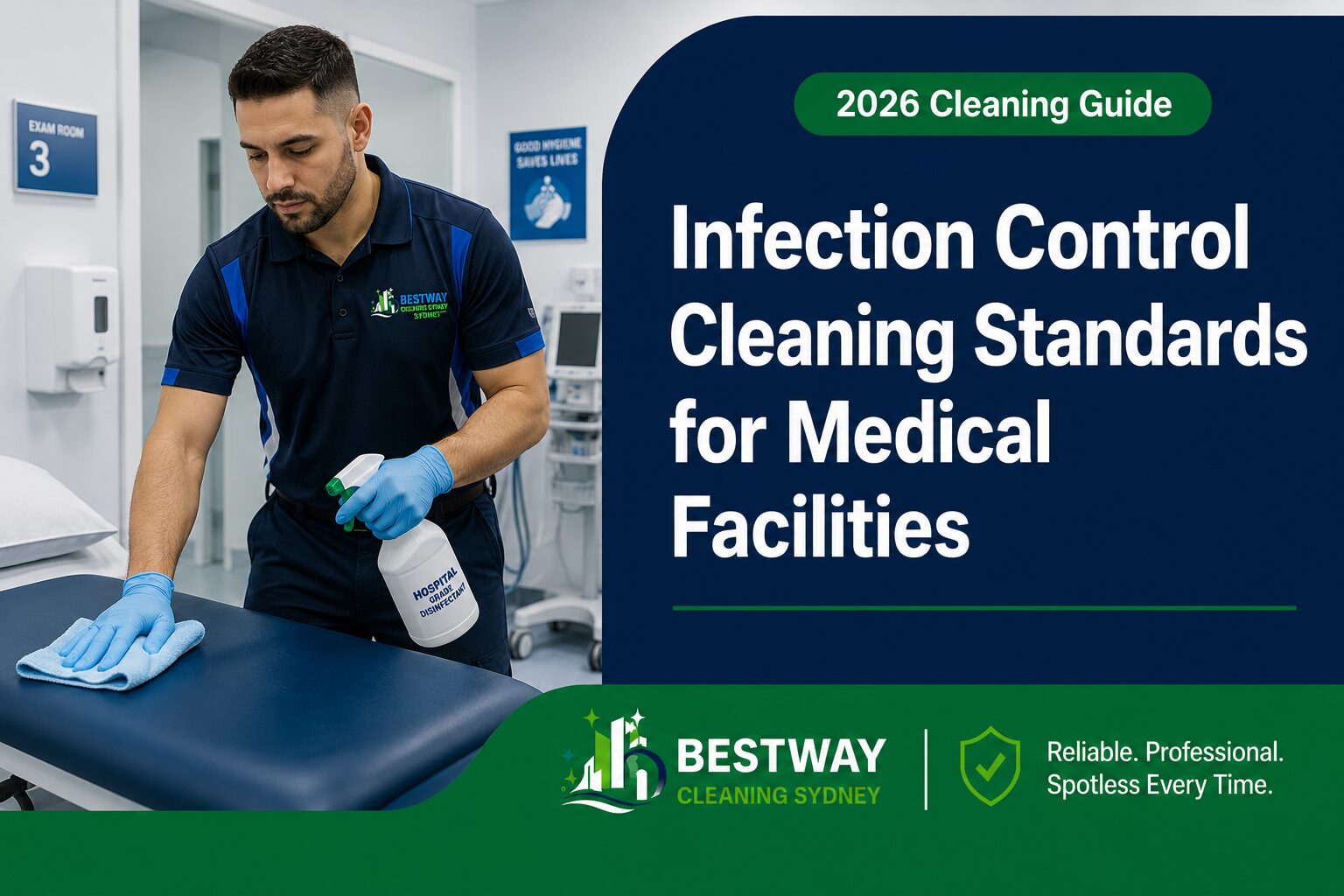
Medical Centre Cleaning Standards
Medical and healthcare environments require stricter environmental cleaning procedures because patients may be more vulnerable to infection.
NSW public health organisations are required to maintain routine environmental cleaning programs, with detailed procedures covering healthcare cleaning responsibilities and methods.
Private healthcare businesses should identify the requirements that apply to their services and seek appropriate clinical or regulatory guidance rather than relying on a standard office cleaning checklist.
Childcare Cleaning Standards
Childcare facilities require careful cleaning of:
- Toys
- Play equipment
- Eating areas
- Bathrooms
- Nappy-change areas
- Sleeping spaces
- Floors
- Shared learning materials
- Frequently touched surfaces
Cleaning schedules should be designed around the age of the children, daily activities, food handling and infection-control risks.
Restaurant and Café Cleaning Standards
Food businesses must follow food safety requirements related to cleaning and sanitising.
Food-contact surfaces and equipment must be properly cleaned before sanitising because visible dirt and food residue can reduce the effectiveness of sanitisers. Businesses should use an appropriate sanitising method and follow product instructions.
Commercial kitchens may also require cleaning schedules for:
- Preparation surfaces
- Cooking equipment
- Exhaust systems
- Cold storage
- Floors and drains
- Waste areas
- Dining areas
- Pest-prone spaces
Warehouse and Industrial Cleaning Standards
Warehouses and industrial premises may have risks associated with:
- Dust
- Packaging waste
- Oil
- Machinery residue
- Loading areas
- High-level surfaces
- Forklift routes
- Chemical storage
- Production waste
Cleaning must be coordinated with workplace safety procedures. Workers should not clean around moving machinery or enter restricted areas without suitable training and authorisation.
Gym Cleaning Standards
Gyms contain high-use equipment and shared surfaces.
A cleaning plan may need to cover:
- Exercise machines
- Free-weight areas
- Mats
- Change rooms
- Showers
- Lockers
- Drinking stations
- Reception areas
- Group exercise rooms
Equipment cleaning responsibilities should be clearly divided between members, staff and professional cleaners.
How Often Should Commercial Premises Be Cleaned?
There is no single cleaning frequency suitable for every business.
The schedule should consider:
- Number of workers
- Daily visitor traffic
- Property size
- Operating hours
- Industry
- Shared facilities
- Food handling
- Vulnerable occupants
- Seasonal conditions
- Existing hazards
A typical Sydney workplace may use the following approach:
Daily Cleaning
Daily tasks may include:
- Emptying bins
- Cleaning washrooms
- Wiping kitchen surfaces
- Cleaning entrance areas
- Vacuuming high-traffic floors
- Removing spills
- Cleaning shared touchpoints
Weekly Cleaning
Weekly tasks may include:
- Detailed dusting
- Low-traffic floor cleaning
- Partition cleaning
- Internal glass cleaning
- Furniture cleaning
- Less frequently used room cleaning
Monthly or Periodic Cleaning
Periodic tasks may include:
- Carpet cleaning
- Window cleaning
- High-level dusting
- Upholstery cleaning
- Floor polishing
- Storage-room cleaning
- Deep kitchen cleaning
- Detailed washroom cleaning
The final schedule should be based on a workplace assessment rather than copied from another business.
Cleaning Chemical Safety and Compliance
Cleaning chemicals can create risks if they are incorrectly labelled, stored, mixed or handled.
Businesses and cleaning contractors should consider:
- Manufacturer instructions
- Product labels
- Safety data sheets
- Correct dilution
- Ventilation
- Personal protective equipment
- Secure storage
- Spill procedures
- Employee training
- Disposal requirements
Cleaning products should not be transferred into unlabelled containers. Incompatible chemicals must not be mixed, and workers should understand the risks before using unfamiliar products.
The safest product is not always the strongest product. Businesses should select cleaning chemicals according to the surface, level of contamination and task requirements.
Why Cleaning Records Matter
Cleaning records help a business confirm that planned work has been completed.
Depending on the premises, useful records may include:
- Daily cleaning checklists
- Washroom inspection sheets
- Deep-cleaning schedules
- Incident reports
- Chemical registers
- Safety data sheets
- Contractor attendance logs
- Quality inspection reports
- Corrective-action reports
- Staff training records
Detailed records are particularly valuable in medical, childcare, aged-care, food, hospitality and high-traffic environments.They also help facility managers identify repeated cleaning problems and improve contractor accountability.
How to Measure Commercial Cleaning Quality
A cleaning contract should be evaluated through regular inspections rather than relying only on customer complaints.
Quality checks can review:
- Visible dust
- Floor condition
- Washroom hygiene
- Bin management
- Kitchen cleanliness
- Touchpoint cleaning
- Supply replenishment
- Odour control
- Missed tasks
- Property damage
- Cleaner attendance
- Response to urgent requests
The inspection method should be simple, measurable and connected to the agreed cleaning scope.
For example, instead of stating that washrooms must be “clean,” the service scope can specify that basins, toilets, mirrors, floors, dispensers and bins must be checked during every scheduled visit.
Common Commercial Cleaning Compliance Mistakes.
Using the Same Checklist for Every Property
A generic checklist may overlook industry-specific risks or unusual areas within the building.
Cleaning Only Visible Areas
Dust, waste and contamination can build up beneath furniture, behind equipment and inside low-traffic spaces.
Failing to Document Responsibilities
When cleaning responsibilities are unclear, tasks may be missed because employees assume someone else will complete them.
Using Chemicals Incorrectly
Incorrect dilution, mixing or storage can damage surfaces and create health risks.
Ignoring High-Traffic Periods
A cleaning schedule may be inadequate during events, seasonal peaks or periods of increased occupancy.
Failing to Review Contractor Performance
Without inspections, recurring problems may continue unnoticed.
Confusing Cleaning With Disinfection
Disinfectant should not be used as a substitute for removing dirt and residue first.
How Sydney Businesses Can Improve Cleaning Compliance
Businesses can strengthen their workplace cleaning standards through a simple process.
1. Assess the Premises
Identify high-traffic areas, hygiene risks, hazardous surfaces and industry-specific requirements.
2. Prepare a Cleaning Scope
List each area, task, cleaning frequency and responsibility.
3. Select Suitable Products
Choose products based on the surface and risk while following safety instructions.
4. Train Cleaning Staff
Ensure cleaners understand equipment, chemical safety, PPE, reporting and site-specific risks.
5. Record Completed Tasks
Use digital or paper checklists to document routine cleaning.
6. Conduct Inspections
Check service quality regularly and correct repeated issues.
7. Review the Cleaning Plan
Update the schedule when staff numbers, property use or business operations change.
Choosing a Commercial Cleaning Company in Sydney
A professional cleaning provider should be able to explain how its service will be adapted to your premises.
Before appointing a company, ask:
- Do you provide a site assessment?
- Can you prepare a customised scope of work?
- How are cleaners trained?
- Are cleaning products and equipment included?
- How do you manage chemical safety?
- How is service quality checked?
- What happens when a task is missed?
- Can the schedule change when business needs change?
- Do you maintain cleaning records? Are you insured?
Avoid choosing a contractor based only on the lowest quotation. An unclear or incomplete quote may exclude important tasks and lead to additional costs later.
Frequently Asked Questions
Is there one commercial cleaning standard for all Australian businesses?
No. Australia does not have one universal commercial cleaning checklist for every workplace. Cleaning requirements depend on workplace safety duties, industry regulations, property use and hygiene risks.
Are businesses legally required to keep workplaces clean?
Businesses must manage health and safety risks in the workplace. Poor cleanliness may create hazards through spills, waste, contamination, unsafe facilities or inadequate hygiene.
How often should a Sydney office be professionally cleaned?
The frequency depends on staff numbers, visitor traffic, workplace layout and shared facilities. Busy offices commonly require daily or several-times-weekly cleaning.
What is included in workplace cleaning standards?
They may cover cleaning frequency, washrooms, floors, waste, high-touch surfaces, kitchens, chemical safety, equipment, inspections and cleaning records.
Is disinfecting required during every commercial cleaning visit?
Not necessarily. Routine cleaning and disinfecting are different processes. The need for disinfection should be based on the environment, contamination risk and applicable industry guidance.
Who is responsible for cleaning compliance?
The business remains responsible for managing workplace risks, even when cleaning is outsourced. Responsibilities should be clearly agreed between management, employees and the cleaning contractor.
Do commercial cleaners need a written checklist?
A written checklist is strongly recommended because it defines the expected tasks, frequency and service standard. It also supports inspections and accountability.
How can a business check whether its cleaners meet the required standard?
Businesses can conduct scheduled inspections, review completed cleaning records, monitor complaints and compare results against the agreed scope of work.
Maintain Better Commercial Cleaning Standards with Bestway Cleaning
Commercial cleaning standards in Australia are based on managing workplace risks and maintaining suitable hygiene for the type of business being operated.
A small office, medical centre, restaurant and warehouse will not require identical cleaning procedures. The right approach is to assess the premises, create a tailored scope of work and monitor the cleaning service regularly.
Bestway Cleaning provides professional commercial cleaning services in Sydney for offices, warehouses, schools, medical centres, childcare facilities, gyms and other commercial properties.
Our cleaning plans can be tailored to your property size, operating hours and service requirements.
For dependable commercial cleaning services in Sydney, contact Bestway Cleaning to arrange a customised cleaning assessment and quotation.
Looking for a Reliable Cleaning Company in Parramatta
Get professional cleaning services with trained staff, customised plans, and consistent quality.
Book Your Cleaning Service Today