
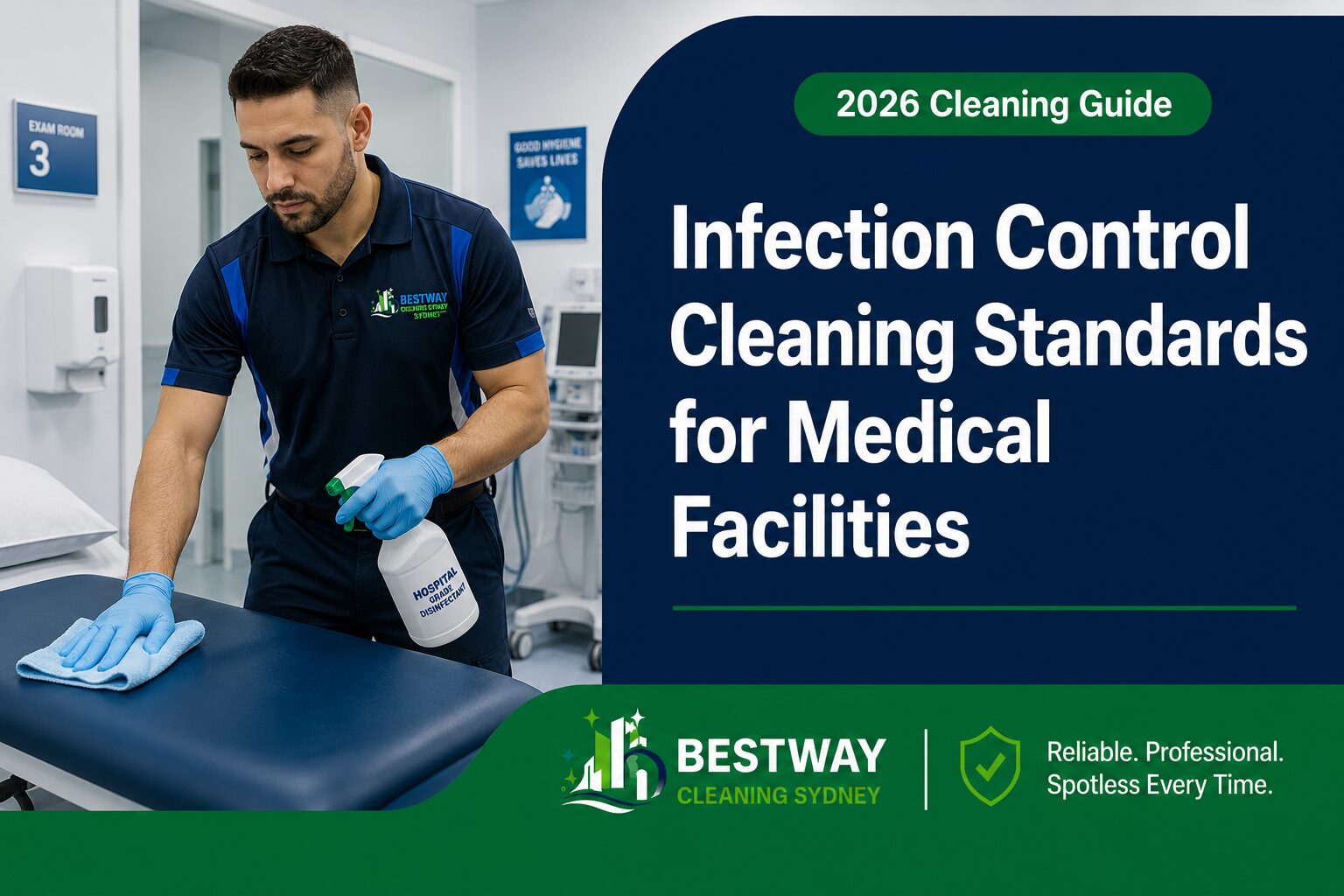
Infection Control Cleaning Standards for Medical Facilities
Medical facilities are environments where cleanliness directly impacts patient safety. Every day, healthcare workers, patients, visitors, and contractors move through consultation rooms, waiting areas, treatment spaces, and shared facilities.
Without proper cleaning procedures, harmful bacteria, viruses, and other microorganisms can spread from one area to another. This is why infection control cleaning is one of the most important responsibilities within any healthcare environment.
Effective infection control cleaning helps reduce contamination risks, supports patient wellbeing, and contributes to a safer workplace for healthcare professionals.
In this guide, we explain infection control cleaning standards for medical facilities and the key practices that help maintain high hygiene standards.
What Is Infection Control Cleaning?
Infection control cleaning refers to cleaning practices designed to reduce the spread of infectious agents within healthcare environments.
Unlike general commercial cleaning, infection control cleaning focuses on areas where contamination risks are higher.
The primary goals include:
- Reducing the spread of germs
- Protecting patients
- Supporting healthcare staff
- Maintaining hygienic environments
- Lowering cross-contamination risks
Medical facilities often require more detailed cleaning procedures than traditional office environments because of the nature of healthcare services.
Why Infection Control Matters in Healthcare Facilities
Healthcare environments bring together people with different medical conditions and health concerns.
Some patients may have weakened immune systems, making them more vulnerable to infections.
Poor cleaning practices can increase the risk of:
- Cross-contamination
- Surface contamination
- Patient exposure to harmful bacteria
- Workplace hygiene issues
A structured infection control cleaning program helps reduce these risks while creating a safer environment for everyone entering the facility.
Areas That Require the Highest Level of Cleaning
Not all areas within a medical facility carry the same level of risk.
Certain spaces require more frequent cleaning and disinfection due to patient interaction and daily activity.
Consultation Rooms
Consultation rooms are used continuously throughout the day.
Cleaning should focus on:
- Examination beds
- Desks
- Chairs
- Medical equipment surfaces
- Frequently touched objects
These rooms often require cleaning between patient appointments depending on facility protocols.
Treatment Rooms
Treatment areas typically involve direct patient care.
Cleaning procedures may include:
- Surface disinfection
- Equipment cleaning
- Waste removal
- Touchpoint sanitisation
Treatment rooms usually require stricter infection control procedures than administrative areas.
Waiting Areas
Waiting rooms often accommodate large numbers of patients and visitors.
Cleaning should focus on:
- Seating
- Reception counters
- Shared surfaces
- Door handles
- Sign-in areas
These spaces can become contamination points if not maintained regularly.,/p>
Bathrooms
Healthcare facility bathrooms require consistent cleaning throughout the day.
Tasks often include:
- Toilet sanitisation
- Sink cleaning
- Surface disinfection
- Consumable replenishment
Well-maintained bathrooms play an important role in overall facility hygiene.
High-Touch Surfaces and Infection Risks
High-touch surfaces are among the most important focus areas in infection control cleaning.
These are surfaces touched repeatedly by multiple people throughout the day.
Examples include:
- Door handles
- Light switches
- Handrails
- Reception counters
- Computer keyboards
- Lift buttons
- Medical equipment controls
- Waiting room furniture
Because these surfaces experience frequent contact, they require regular cleaning and disinfection.
Cleaning Versus Disinfection
Many people assume cleaning and disinfection are the same thing, but they serve different purposes.
Cleaning
Cleaning removes:
- Dirt
- Dust
- Debris
- Organic matter
Cleaning helps prepare surfaces for further treatment.
Disinfection
Disinfection helps reduce harmful microorganisms that may remain on surfaces after cleaning.
In healthcare environments, both cleaning and disinfection are important components of infection control programs.
Daily Infection Control Cleaning Tasks
Medical facilities often perform a range of cleaning tasks throughout the day.
Common daily tasks include:
Surface Cleaning
- Desks
- Reception counters
- Consultation room furniture
- Shared equipment
Bathroom Sanitisation
- Toilets
- Sinks
- Door handles
- Touchpoints
Floor Cleaning
- Vacuuming
- Sweeping
- Mopping
Waste Removal
- General waste collection
- Bin cleaning
- Waste area maintenance
Consistent daily cleaning helps maintain hygiene standards throughout the facility.
The Importance of Cleaning Frequency
Cleaning frequency plays a major role in infection prevention.
Busy healthcare environments often require:
Daily Cleaning
Core cleaning activities performed every day.
Multiple Daily Sanitisation Visits
Additional cleaning of high-touch surfaces and patient-contact areas.
Periodic Deep Cleaning
More detailed cleaning performed monthly or quarterly.
The appropriate schedule depends on patient volume, facility size, and healthcare services provided.
Managing Cross-Contamination Risks
Cross-contamination occurs when contaminants are transferred from one surface, person, or area to another.
In healthcare environments, reducing cross-contamination is a priority.
Good infection control practices often focus on:
- Cleaning high-risk areas frequently
- Maintaining clean equipment
- Managing waste correctly
- Following structured cleaning procedures
Reducing contamination pathways helps support safer healthcare environments.
Medical Waste and Infection Control
Waste management forms an important part of healthcare cleaning programs.
Poorly managed waste can create hygiene concerns and increase contamination risks.
Medical facilities should ensure:
- Waste is removed regularly
- Waste collection areas remain clean
- Bins are maintained appropriately
- Cleaning schedules include waste management areas
Maintaining clean waste zones contributes to overall infection control efforts.
Common Infection Control Cleaning Challenges
Healthcare facilities often face unique cleaning challenges.
High Patient Turnover
Large numbers of patients moving through the facility increase cleaning demands.
Shared Contact Points
Multiple people interact with the same surfaces throughout the day.
Busy Waiting Areas
Crowded environments require ongoing maintenance.
Continuous Operations
Many healthcare facilities operate extended hours, making cleaning schedules more complex.
Professional planning helps address these challenges effectively.
Staff Areas Should Not Be Overlooked
Many infection control programs focus heavily on patient-facing areas, but staff spaces are equally important.
Cleaning should also include:
- Staff kitchens
- Break rooms
- Meeting rooms
- Shared workstations
- Staff bathrooms
These spaces experience daily use and should form part of the overall cleaning program.
Benefits of Professional Medical Cleaning Services
Professional medical cleaning companies understand the specific requirements of healthcare environments.
Benefits often include:
Consistent Cleaning Standards
Structured cleaning programs help maintain reliable outcomes.
Better Hygiene Management
Professional teams understand healthcare cleaning priorities.
Improved Patient Confidence
Clean facilities help create positive patient experiences.
Support for Infection Prevention
Regular cleaning helps reduce contamination risks across the facility.
Choosing a Medical Cleaning Provider
Healthcare facilities should look for cleaning providers that have experience working within medical environments.
Important considerations include:
- Healthcare cleaning experience
- Staff training
- Quality control systems
- Flexible scheduling
- Knowledge of infection control practices
A qualified cleaning provider can help support ongoing hygiene and infection prevention goals.
Final Thoughts
Infection control cleaning standards play a critical role in maintaining safe healthcare environments. Medical facilities must focus on high-touch surfaces, consultation rooms, treatment spaces, waiting areas, and shared facilities to reduce contamination risks.
A structured cleaning program that combines routine cleaning, regular disinfection, and ongoing monitoring helps support patient safety and workplace hygiene.
By partnering with experienced medical cleaning professionals and maintaining consistent cleaning schedules, healthcare facilities can create cleaner environments that support both patients and healthcare staff every day.
FAQ Schema Questions
What is infection control cleaning in healthcare facilities?
Why is infection control important in medical centres?
How often should high-touch surfaces be disinfected in healthcare environments?
What areas require the most attention during medical cleaning?
How does professional medical cleaning help reduce contamination risks?
Looking for a Reliable Cleaning Company in Parramatta
Get professional cleaning services with trained staff, customised plans, and consistent quality.
Book Your Cleaning Service Today